27 Nov 2026 · Piyush Bhavar
Ola Electric Laughed at Dealers for 5 Years. Now It's Handing Them the Keys
Ola Electric tried a Tesla-style model with no dealers, but Indian buyers want a trusted neighbourhood shop for repairs. After its revenue fell 39% to ₹421 Crore, it stopped orders at its own stores on November 1 and is moving sales and service to local dealers.
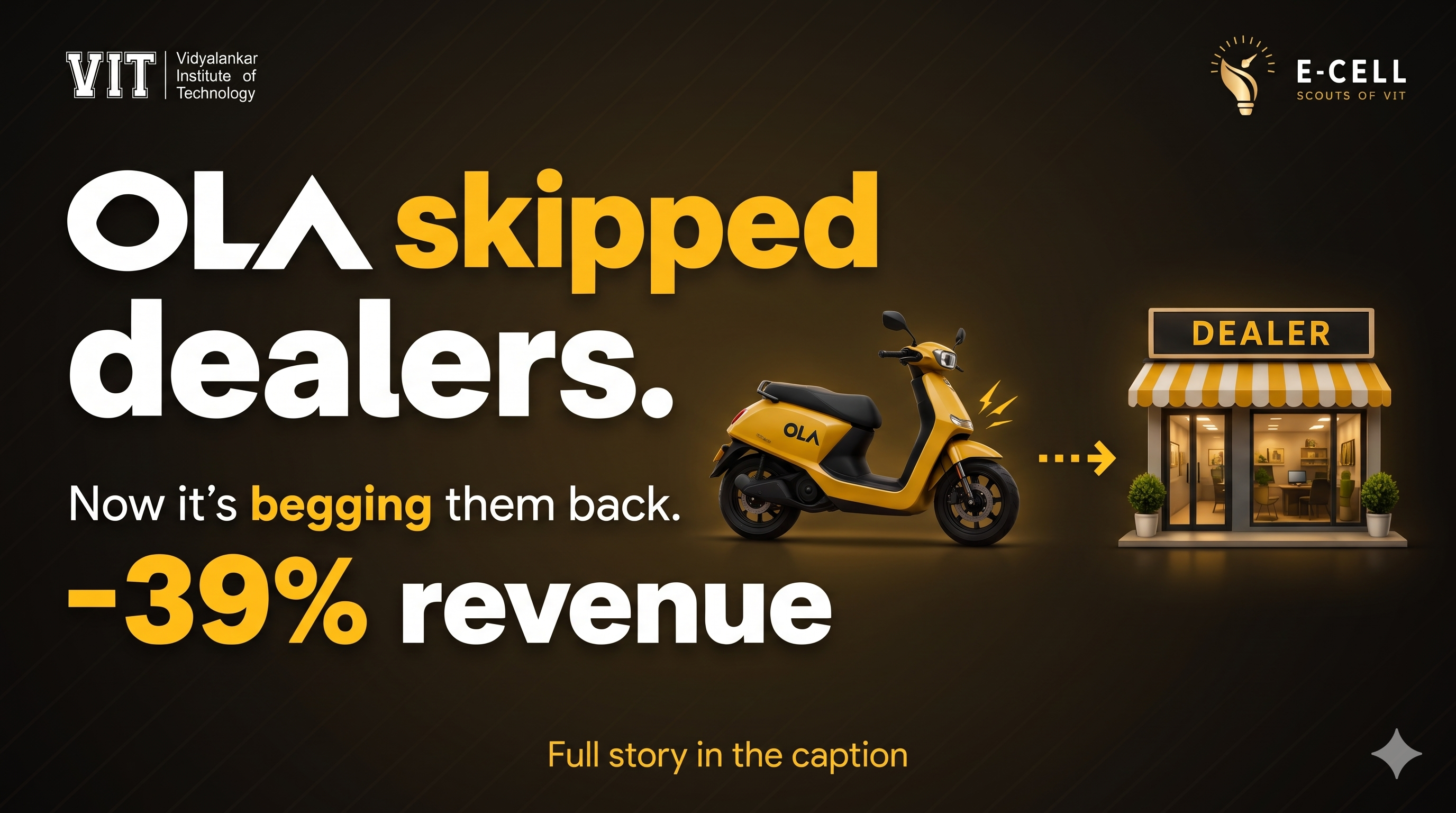
For 5 years, Ola Electric laughed at traditional auto dealers. This month, it admitted those dealers were right all along. The Tesla Playbook That Didn’t Fit India: When Ola launched, it tried to copy Tesla in India: no middlemen, no local dealership shops, just an app and fancy company showrooms. It looked great on launch day. Then the scooters actually started breaking down. How Indians Actually Buy Two-Wheelers In India, you don’t buy a two-wheeler for the software. You buy it knowing there’s a trusted neighbourhood shop down the road that will fix it in 2 hours when you’re late for college or work. While Ola’s company service centres piled up with broken scooters and angry customers, “boring” legacy brands like TVS and Bajaj, along with Ather, quietly ate its lunch using the exact dealer network Ola tried to skip. The Bill Came Due (November 12–13, 2026) This week, the numbers made it official: • Revenue crashed 39%. Ola Electric’s July–September revenue fell to ₹421 Crore, from ₹690 Crore a year earlier. • Net loss: ₹362 Crore. That is slightly lower than the ₹418 Crore loss a year ago, but revenue shrank much faster. • Company stores are closing. On November 1, Ola stopped taking orders at its company-owned stores, and most of them are set to shut by December 2026. • Dealers take over. Local dealers now handle sales and service. As of November 8, 255 dealers were running 319 stores, with a target of 700+ stores by March 2027. The Lesson Copying a Silicon Valley playbook looks cool on stage. Understanding how Indians actually buy and repair things is what keeps you alive. Distribution isn’t a detail you can skip. In a market where people want a trusted shop down the road, the “middleman” is part of the product. Your Verdict If you were buying an electric scooter in India today, would you still trust Ola after this pivot, or would you pick Ather, TVS or Bajaj?